
Decks

Top Questions to Ask Your Deck Architect in Charlotte

Planning a new deck or reworking the one you already have means more than just choosing between wood or composite. It’s about getting the bones of it right from the beginning. That starts with finding someone who listens, builds smart, and understands what makes a structure last. A good deck architect helps shape how you’ll use your space, how safe it feels, and how well it handles the weather.

In Charlotte, NC, where winter brings cold rains and spring hits fast, you need a deck that stands up to the elements. Asking the right questions up front saves headaches later and helps your space work better year-round. Whether you want a quiet spot to sip coffee or a hub for weekends with friends, what you ask early on sets the tone for everything that follows.

What Is Your Experience With Local Projects?

Charlotte’s terrain isn’t all flat. Some yards slope downhill, others are shaded by mature trees, and a lot of neighborhoods have very different rules and requirements when it comes to structures. That’s why it pays to work with someone who has already built decks in the area.

• Ask what parts of Charlotte they’ve worked in before and what kinds of layouts they’ve handled.

• See how they dealt with challenging slopes or limited backyard space.

• Talk about code requirements, especially around load-bearing structures, railing heights, and setbacks.

• Ask to see examples of their style. Simple sketches or past layouts help you know what they'll lean toward.

Even small local details, like how much sun certain spaces get or how fast yards drain after rain, can have a big impact on your deck’s performance. Having a deck built by someone familiar with Charlotte means you’re more likely to avoid surprises down the road. Builders who have been through projects here will know which permits to pull and what design tricks work best, given the land and environment.

How Do You Plan for Seasonal Changes and Drainage?

Charlotte winters are more wet than snowy. But cold snaps and weeks of rain can still do damage if water doesn’t have a place to go. A smart design should handle runoff without pooling water around your posts or making the surface slippery.

• Ask how they design for water movement underneath and off the deck surface.

• Find out how they allow space for airflow, which helps stop wood from staying damp.

• See what materials they recommend that perform well through humid summers and wet winters.

• Make sure they factor in temperature swings, which can cause boards to expand and contract.

A well-thought-out plan prepares your deck to handle each season without extra maintenance. The right materials and slope might seem like small details, but they make a big difference over the years. Good airflow beneath the boards keeps the wood from rotting and helps keep mold at bay. And when your deck can shed water quickly, you spend less time fixing issues and more time enjoying it.

Can You Walk Me Through the Design and Build Timeline?

No two decks are exactly the same, and timelines can shift depending on size, material choices, and the weather. Cold or wet winters can stretch out a build, but knowing that in advance helps avoid surprises.

• Ask what usually happens first. Do they measure the yard, sketch a layout, then pull permits?

• Get a sense of each step and how long it tends to take.

• Talk about weather delays. In Charlotte, things can change quickly in the winter.

• Learn when they’ll need access to parts of your yard and how that might change your daily routine.

The clearer the timeline, the easier it is to plan around the work. Many projects start with a site visit and rough sketches before an official design is drawn up. Permits can sometimes take a week or two, especially during busy building seasons. Understanding the sequence of events gives you more control and less stress. It also sets expectations for when your yard might be out of use and when you’ll need to make arrangements for pets, kids, or parking.

What Safety and Code Standards Do You Follow?

No matter how nice a deck looks, safety needs to be built into it from the start. Each city has its own guidelines, and Charlotte is no different. From structural supports to stair railings, every part should meet local building codes.

• Ask if they’re familiar with Charlotte’s permit process and code rules.

• Make sure they anchor posts and railings the right way, especially on second-story or elevated decks.

• Ask how they check for weight limits or load support.

• Talk about stairs. These tend to get overlooked, but they’re one of the most used parts.

A deck doesn’t just need to hold people up. It needs to stay solid through shifting weather and daily use. Good builders know the code for spacing between railings and how deep footings need to be. They’ll explain why certain supports should be used, which can put your mind at ease about the long-term stability of your new outdoor space. Checking ahead of time means you’re not caught off guard by a surprise city inspection or an unexpected delay.

How Will We Communicate and Review the Design Together?

Open, regular communication keeps the build process from going off-track. Every homeowner has different ideas and preferences, so it helps to know how decisions will be shared and changes handled.

• Ask how often you’ll meet or chat about progress.

• Find out what kinds of materials you’ll receive. Are there samples, digital sketches, or models to help you see the plan?

• Talk about how hard or easy it is to make adjustments if you change your mind halfway through.

• Ask if there’s a main point of contact in case something unexpected comes up.

You should feel involved at every step, not like decisions are being made without you. Some people prefer checking in once a week, while others want an update every few days. Sketches, sample boards, and even 3D models can help you picture what the finished deck will look like before a single board is cut. Being able to talk openly about changes or concerns helps make the process less stressful.

Clear lines of communication work both ways. It makes it far easier to adjust the design if you think of something new or spot a problem on the plans. Good builders will encourage you to share your feedback and questions as the build progresses. That way, everyone’s clear on what’s happening next, and the project can move forward without confusion or delays.

Set Your Deck Up for Success

Getting the space you want begins with a good conversation. When both sides ask questions and share ideas, the whole process goes smoother. At Deckscapes, Inc., we offer design and build services that include custom deck layouts, screen porches, and even patio additions. Our team understands Charlotte’s seasonal changes and city codes so your deck is both beautiful and properly built from the ground up.

No one wants surprises after the framing is done or wishes they’d brought something up earlier. A few smart questions, especially about how your deck architect plans for Charlotte’s seasons, follows rules, or handles delays, makes a big difference. Being open about what you want and staying honest about your needs helps shape a deck you’ll want to use all year. Planning a deck is a partnership, and it works best when everyone’s on the same page from day one.

Building a better deck starts with asking the right questions and planning your space thoughtfully. We’ve covered everything that matters most to homeowners in Charlotte, NC, from layout and drainage to safety and timelines. A skilled deck architect understands local conditions and how to design for every season. At Deckscapes, Inc., we focus on what you want and how your space should work. Reach out to us today so we can help bring your vision to life.

Warning Signs Your Charlotte Deck Needs Professional Repair

Charlotte winters may not bring piles of snow, but that doesn’t mean your deck has it easy. Cold nights, steady moisture, and quick swings in temperature can all wear down different parts of your deck, especially if it’s a few years old. Many homeowners don’t look too closely until a board splits, railings shift, or something just doesn’t feel right underfoot.

If you’re noticing small issues or warning signs, it’s worth paying attention before things get worse. Ignoring damage now can lead to higher costs later and might even put your safety at risk. Calling experienced deck contractors in Charlotte for an inspection is a smart step if you’re unsure. The signs are usually easy to spot once you know what to look for, so here’s where to begin.

Loose or Wobbly Railings

Your railings should feel solid when you press on them. If they rock back or shift when you lean or tug, it’s a warning sign that something underneath may be failing. This is especially risky on a raised or two-story deck, where a broken railing could lead to a fall.

• Shaky posts often point to wood rot, rusted hardware, or weak footing below.

• Brackets can loosen over time, especially if they weren’t sealed well or have come into contact with moisture.

• You might notice missing screws, warped wood, or a railing that leans just a little farther each season.

Even a small wiggle deserves a closer look. These small changes tend to get worse as the seasons shift and materials expand or shrink.

Sagging or Uneven Deck Boards

Winter weather in Charlotte is hard on wood. The cold doesn’t have to be extreme to cause problems. High humidity and rain followed by dry, clear days can lead to twisting, swelling, and shrinking.

• Uneven or sunken boards often result from weak joists or improper spacing in the framing below.

• Sometimes boards bend or lift entirely on one side, especially if they're older or water has begun to seep in.

• When walking across your deck starts to feel soft or bouncy in spots, that's more than just cosmetic, it's a sign the support underneath is starting to fail.

Sagging boards invite more water to collect, making repairs bigger than they need to be if caught early.

Rotting or Discolored Wood

Wood rot tends to start small and grow quietly. What looks like a stain or soft spot can actually be the start of something deeper. Color changes, crumbling corners, or boards that flake apart when poked all point to rot settling in.

• Rot builds up faster in areas that collect water, like near your stairs or underneath furniture.

• In the winter months, water that freezes and thaws repeatedly causes damage that isn’t always visible on the surface.

• If boards start to look darker near the edges or feel spongey when stepped on, there's a good chance moisture has gotten inside.

Rot can spread to nearby boards quickly, even if only one section was exposed to water at first. Once rot takes hold, the deck can lose strength in areas that once supported more weight.

Rusting Hardware and Loose Fasteners

Moisture in the air and steady rain means a slow breakdown of any metal on your deck. Screws, nails, joist hangers, and attachment plates all play a big part in holding your structure together. Once these start to rust or bend, the support can’t do its job properly.

• If you see reddish or orange streaks around screw heads or brackets, that’s the early stage of rust.

• Nails that pop out of boards or fasteners that move when pressed could mean the wood around them is expanding and weakening.

• Connections between beams or joists might look fine from a few feet away, but a closer check often shows signs of age or moisture damage.

Charlotte’s humid summers and wet winters speed up metal wear, even if the deck was built solidly in the beginning. Hardware that was strong in the past can lose reliability over time, so watch for areas where metal looks dull, stained, or rough to the touch. If fasteners are missing or easily pulled out, further stress can cause sudden failures.

Gaps Appearing Around the House or Deck Frame

Most decks are connected to the house using a long, heavy board called a ledger. Over time, if it wasn’t properly installed or water has gotten behind it, that connection can begin to shift. When that happens, other parts of the deck frame might pull away or sag.

• If you spot a gap between the house and the deck that didn’t exist before, start keeping an eye on it.

• Water slipping into that space can damage both your deck and your house wall or foundation.

• Sometimes, the whole deck may seem uneven or the stair treads no longer sit flat against the ground.

Gaps around the ledger or at the joints can allow pests, moisture, and even mold to enter. A small shift in the frame can signal larger structural issues developing, especially if water is silently collecting between the boards and the house. These problems can sometimes go unnoticed until the deck feels less stable than it used to or the foundation begins to show signs of wear.

When you notice movement around the deck framing, it’s time to talk with deck contractors in Charlotte who understand local building codes and climate challenges.

Choose Reliable Repair and Lasting Value

Catching problems with your deck early on helps prevent major issues before they grow. You don’t have to be an expert to notice the warning signs. A shaky railing, a soft board, or a corroded bracket is enough reason to pause and get a closer look. Winter might be mild around here, but that doesn’t mean your deck is immune to damage.

We specialize in professional repairs and upgrades that are built for year-round performance in Charlotte, North Carolina. Our team uses high-quality, weather-resistant materials and follows the best practices outlined by national organizations like NADRA (North American Deck and Railing Association) to ensure your repairs meet the latest standards. If your deck is showing any of the signs we've discussed, don't wait until spring or summer to take action. Timely maintenance will help you avoid costly repairs and let you enjoy your outdoor space with peace of mind when the warm days return.

Seeing the first signs of wear on your deck can be discouraging, but with our experience and knowledge of how Charlotte weather affects wood, we know exactly what to look for when issues arise. When you need help from experienced deck contractors in Charlotte, trust Deckscapes, Inc. to inspect your deck and recommend the best solutions so you can enjoy your outdoor space with confidence, just give us a call to discuss your options today.

Professional Solutions for Deck Board Gaps and Spacing

Deck boards might seem like simple planks of wood or composite, but the spacing between them plays a big role in how long your deck holds up. When the gaps are right, water drains like it should, air flows freely, and your boards can breathe a little in different weather. It’s one of those details in deck building that might not seem like a big deal at first glance, but it can seriously affect how the whole thing feels down the line.

Leaving too much room between boards can create trip hazards and gaps that feel uncomfortable to walk on. On the other hand, boards that are packed too tightly can buckle, twist, or trap moisture. That means mold, rot, or something worse may be just around the corner. In Charlotte, with all the swings in humidity, correct spacing is even more important. Let’s take a closer look at how proper spacing works and why professionals never skip this step.

Understanding Deck Board Spacing

Deck boards need a specific amount of space between them to work properly once installed. Think of these gaps like pressure valves—they let the boards expand and contract, and they keep moisture from sitting still. When done well, spacing also adds to the look of the deck, keeping everything neat and aligned.

Most builders leave a gap between 1/8 inch to 1/4 inch for traditional wood boards. Composite or PVC decking can vary depending on the product. Either way, the right amount of space depends on:

- Type of material (wood shrinks and swells more than composite)

- Time of year the deck is installed

- Airflow and drainage needs under the deck

- Local climate, including humidity and rainfall

Charlotte brings its own set of challenges. Humid summers and mild winters can put wood through cycles of expansion and contraction. Some people make the mistake of spacing boards tightly during drier months, only to find out later that the deck swells up once the humidity returns. That can cause squeaking, popping, and even lifted nails or screws.

Spacing isn’t just a visual detail. It helps avoid headaches months or years after installation. Experienced deck builders know that every project needs a different approach based on materials, layout, and the environment. There’s no one-size-fits-all answer when it comes to board gaps.

Professional Techniques For Ensuring Proper Spacing

Getting deck board gaps right calls for a careful approach during installation. Slapping boards down and eyeballing the space doesn’t cut it. Consistency matters from one end of the deck to the other. That’s where professional tools and methods come in handy.

Here are a few techniques pros use regularly:

1. Gap spacers – These are small plastic or metal pieces placed between each board as they’re being attached. They come in set widths and help keep things uniform across the whole surface.

2. Chalk lines and clamps – Chalk lines help lay out the frame and make sure everything is straight. Clamps or board straighteners hold warped boards in place while they’re being fastened down.

3. Fastener placement tools – Some systems not only attach the board but also place it at the correct spacing. This is common with hidden fasteners used in composite decks.

Before boards are even installed, a pro will often let the materials acclimate on-site. That means letting wood or composite boards sit for a few days in the environment they’ll live in. This helps reduce major changes in shape after they’re nailed or screwed into place.

Using the right tools gets the process started. But the real advantage comes from knowing how different materials behave. A dense hardwood might need a totally different treatment compared to pressure-treated pine. If moisture levels are high, spacing decisions may need to be adjusted on the fly. That kind of call takes experience and attention to detail.

A quality deck is more than just clean lines and nice boards. It’s about avoiding issues later because the prep and spacing were handled right the first time.

Common Problems From Incorrect Deck Board Spacing

When deck boards aren’t spaced right, problems can start showing up faster than you’d expect. One of the most common signs is water sitting on the surface. Without enough space between boards, rainwater can’t flow through effectively. Pooled water can wear down sealants, saturate the boards, and invite mold or mildew.

Next up is warping. Boards that don’t have enough space to expand during humid summers will start to press against each other. That tension can lead to cupping or twisting. Instead of a smooth walking surface, you get uneven boards, cracks, and even loose nails popping out.

There’s also the issue of structural support. Water that gets trapped between boards puts stress on the underlying framework. Joists and beams begin to carry extra weight from the swelling and trapped moisture. In time, this weakens the entire structure.

In a real-world example, homeowners in Charlotte installed a pressure-treated pine deck in late fall. The boards were dry, so they spaced them tightly thinking it looked nicer. Come summer, those same boards had swollen due to humidity. Without room to grow, they began to press and bend, throwing off the whole look of the deck. Cracks started forming, and nails pushed out. All of it came from a small detail ignored during installation.

Improper spacing might not seem like a big deal during setup, but months later, it can lead to repairs or a full replacement. It’s always better to invest in doing things right from the start.

Why Working With Charlotte Deck Professionals Makes a Difference

Hiring experienced deck companies in Charlotte brings a big advantage when planning board spacing. Professionals who live and work in the area are already familiar with the local weather patterns that affect deck health. They’ve seen how materials react over time in our climate and know how to get ahead of problems.

A skilled team knows how wood and composite boards respond to Charlotte’s humidity. They’ve worked with the same materials you’re considering and have already figured out what works best when the summers get intense or the weather changes quickly. That knowledge goes beyond the deck itself and includes tips on ventilation, slope, and drainage—things that help make sure decks last season after season.

What else do the pros bring?

- They let boards acclimate properly before installation.

- They use dependable spacers, clamps, and layout guides.

- They adjust spacing based on timing, rainfall history, and wood condition.

- They fasten boards with care to create uniform, lasting spacing.

Even the most high-quality boards won’t do much if they aren’t placed with care. A well-built deck doesn’t sway, creak, or show early signs of wear. Professional-grade spacing plays a big role in that final result.

Handing the job to a trusted team means more than avoiding mistakes. It means you’ll enjoy your deck longer without worrying about what’s happening underneath or between those planks.

Keep Your Deck In Top Shape

Good deck board spacing is one of those small details that shapes the whole outdoor experience. When boards have enough room to shift with the seasons and breathe after a storm, they stay in shape longer. They drain better. They stay flatter. They look cleaner. All that adds up to a surface that works better year after year.

Skipping the right prep can lead to a lot of wasted time and frustration. When deck boards warp or mold shows up after the first season, it’s easy to regret rushing through what seemed like a tiny step during installation.

If you’re looking to update or build a deck in Charlotte, don’t overlook spacing. Making smart calls early on saves a lot of pain down the road. The right gaps, the right tools, and the right team can mean the difference between a project that brings headaches and one that adds real value to your home.

Thinking about enhancing your outdoor space in Charlotte? For expert guidance and proper deck board spacing, reach out to knowledgeable professionals. Discover how trusted deck companies in Charlotte can ensure your deck stays in top condition for years to come. Trust Deckscapes, Inc. to bring your vision to life with precision and expertise.

Dealing with Ice and Snow Damage on Your Charlotte Deck

Winter weather in Charlotte may not bring snowstorms every week, but when it does snow, your deck can take a hit. Freezing rain, sleet, and the occasional snowfall push water into cracks, freeze between boards, and create unsafe, slick surfaces. These cold conditions do more than leave a mess—they can start gradually damaging your deck if you aren’t paying close attention.

Decks are made to take on different weather patterns, but repeated freeze-and-thaw cycles can really do a number on them. This is especially true from December through late winter when temperature swings become more common and moisture tends to linger for longer periods. Taking a few minutes to check on your deck after the weather turns cold can impact its longevity and your safety. Recognizing early warning signs helps you catch small issues before they grow into costly repairs.

The good news is, caring for your deck doesn’t have to be complicated. With the right checks, a few basic tools, and knowing when to ask for help, you can keep your outdoor space looking great. Deckscapes, Inc. is here to help Charlotte homeowners through each season with smart, reliable support.

Assessing Ice and Snow Damage

When snow or ice shows up, most people focus on roads and driveways. The deck often gets ignored until the sun melts everything off. But ice and cold can wear down wood, loosen hardware, and trap moisture in places it doesn’t belong.

After any snow event—or sub-freezing night—take a few moments to look for signs your deck might have suffered:

- Splintering or cracking boards, especially at the ends

- Warped planks bending upward or dipping in spots

- Rusted screws, hangers, or support brackets

- Railings that feel loose or steps that wobble

- Ice patches that melt slower than the rest

- Water pooling where boards meet or near fasteners

- Areas turning gray, soft, or showing mildew

Small surface flaws may not seem urgent, but they often mean moisture is sneaking in. Once inside wood fibers, that water expands with each freeze, which can widen cracks and shift parts of the deck apart over time.

It’s a good habit to walk your deck after each winter storm, especially if ice was involved. Start by gently brushing away any snow to get a clearer look. Pay attention to spots beneath furniture, stairs, railings, and far corners where melting happens slower. And don’t ignore what’s beneath the deck—problems are often hidden in the supports and framing below.

Regular winter checks make it easier to keep costs down and avoid more serious projects when spring arrives.

Preventive Measures Before Snowfall

Charlotte’s winters may be unpredictable, but they can still sneak up and cause issues. With just a little prep, your deck can stand up better to what winter throws at it. Taking action before the coldest days arrive saves you stress later.

Here’s how to get your deck winter-ready:

1. Clean It Thoroughly

Clear away any leaves, dirt, or debris. Moisture is more likely to collect on messy surfaces, making it easier for damage to set in.

2. Apply a Water-Repellent Barrier

If your deck hasn’t been sealed or treated in the past year, apply a water-repellent product. This helps block moisture from soaking in and expanding when frozen.

3. Cover or Move Furniture

Ice can get trapped under chairs, tables, or planters. Bring them inside if possible or use covers that allow airflow underneath to help prevent rot.

4. Trim Overhanging Branches

Snow or ice can make limbs break off and fall onto your deck. Trim back anything looming over the space to avoid heavy debris that might dent or damage decking.

5. Use Breathable Deck Covers

If you plan to use a cover, choose one that’s breathable and meant for outdoor use. Avoid using plastic tarps, which can trap in condensation and cause more harm than good.

6. Check and Correct Drainage

Look at the area underneath and around the base of your deck. If water pools below it, consider ways to divert flow or improve drainage. Frozen water under supports can stress the substructure over time.

For Charlotte homes, prepping your deck doesn’t mean bracing against snow every week. It’s about creating simple routines that protect what you already have. A few actions at the start of winter keep your space looking fresh and solid even after a long, wet season.

Immediate Actions After Snow

Once the snow falls, how you respond can make the difference between protecting your deck and causing unintentional harm. Picking the right approach means fewer repairs when the season ends.

Start with your tools:

- Use plastic snow shovels instead of metal ones. Metal shovels gouge wood and scrape off protective finishes.

- A firm-bristle push broom works well for light snow without nicking the surface.

- Skip the generic rock salt. Opt for pet-safe and wood-safe ice melt products designed for decks and wooden surfaces.

Even if thick ice seems stuck, leave it be. Avoid chopping or stabbing at frozen spots. This is when boards split, finishes peel up, or planks get chipped. A safer method is to sprinkle a deck-safe melt product, wait for it to loosen buildup, and then sweep it away.

Other tips to manage snow responsibly:

- Shovel in the direction of your deck boards to help protect the surface

- If snow is deep, clear in layers instead of trying to scrape it all off at once

- Focus first on walking areas and steps that need to stay safe and dry

- Keep snow piles away from railings or corners to prevent unnecessary stress from weight and moisture

Snow might feel temporary, but it can make a lasting impact if not handled correctly. Piled-up snow becomes heavy quickly, especially when it's a wet or slushy mix. That weight puts pressure on boards, joints, and beneath the surface.

By taking your time and treating your deck gently during cleanup, you reduce the risk of costly damage and keep everything safe through the colder months.

When to Call a Professional Deck Builder in Charlotte

Sometimes, maintenance and inspections just aren't enough. When things start shifting or weakening after bad weather, it’s time to call someone who can dig a little deeper. If you’re noticing problems that don't seem to clear up once the snow melts, a professional deck builder in Charlotte can find the real cause and offer a fix that holds up.

Here’s when you should think about picking up the phone:

- Decking that bows, shifts, or doesn’t bounce back with warmer weather

- Water that keeps getting stuck between boards despite snow cleanup

- Railings that wiggle or posts that don’t feel solid anymore

- Support beams or frames underneath that show signs of cracking or rot

- Fasteners that are rusted, missing, or appear to be pulling loose

- Slippery or unstable steps that seem worse after winter storms

An experienced builder knows what to look for even in hidden or hard-to-reach spots. They'll examine everything from surface issues to deeper framework damage that could pose safety concerns. Especially if you haven’t had an inspection in a few years, professional input now can prevent a much bigger repair later.

For example, with older wood decking, moisture can sneak into little cracks or nail holes. Winter then causes repeated swelling and shrinking, which opens gaps wider and drags parts of the structure out of alignment. At first, it might just seem like loose nails or fading boards—but that’s how more serious problems begin.

Deck builders in Charlotte understand both the materials and conditions that local homes face. Their guidance helps you move forward with smart repairs that are well-suited to the climate and built to last.

Keep Your Deck Standing Strong All Winter

Winter may not hit Charlotte as hard as other places, but it still brings enough cold and moisture to slowly wear away at your deck. More than the occasional snowfall or frost, it's the hidden freeze-thaw cycles that tend to cause the most trouble. Staying alert to small changes is the best way to steer clear of bigger headaches.

From clearing snow the right way to prepping ahead of stormy weather, taking regular action helps your outdoor space handle whatever winter throws at it. Start by keeping the area clean, sealed, and free from standing water. Stay safe when clearing icy buildup, and don’t wait too long to talk to a professional when things feel off.

With the right approach, your deck can stay secure, strong, and ready to use the moment the sun comes out again. Keeping it up doesn't take much—just a bit of attention and a good plan for each season. When winter ends, you’ll be glad you started early.

To keep your deck in top shape and ready for anything Mother Nature throws at it, regular maintenance makes a big difference. If you're in Charlotte and looking for trusted support, take a look at what a professional deck builder in Charlotte can do. Deckscapes, Inc. is here to help your outdoor space stay strong, safe, and stylish all year long.

Understanding Deck Support System Requirements

A sturdy deck is more than just a nice place to relax. It’s a structure that has to handle weight, weather, and time. While boards and railings make the deck look complete, its real strength comes from underneath. The support system below is what keeps everything from shifting, sagging, or worse. Without the right foundation, even the best-looking deck won’t stay safe or useful for long.

For homeowners in Charlotte, this matters even more. Humid summers, heavy rain, and freezing winters create unique stress on decks. Your deck’s support system needs to be solid from the start. Weak spots often go unnoticed until damage becomes obvious. Knowing what goes into the system and getting it right early can prevent major problems later.

Understanding the Basics of Deck Support Systems

A deck support system may be out of sight, but it does all the heavy lifting. It holds up your deck, keeps surfaces level, and stops problems like sagging, shifting, or rotting. Think of it the same way you would think of a house foundation. If that’s not stable, everything else suffers.

This system typically includes three core components:

1. Footings: Concrete piers or blocks placed underground that carry the load of the entire deck. These need to be deep enough to go below the frost line, especially in areas that freeze during winter.

2. Posts: Vertical supports that connect footings to the frame. These raise the deck above ground and help spread out the weight.

3. Beams and Joists: Horizontal elements that form the framework and support deck boards. Everything from furniture to foot traffic relies on this structure.

Each component plays a unique role, and they must work together to keep the deck stable and durable. Without a dependable support system, issues like warped boards, shifting footings, or a sagging frame can show up faster than expected. Given Charlotte’s weather patterns, including wet falls and sudden cold snaps, even small issues can grow quickly.

Key Requirements for Deck Support Systems

Building a strong deck starts with using dependable materials. Most support systems rely on pressure-treated wood for posts and beams because it's more resistant to decay and pests. For high-moisture areas, galvanized connectors and stainless-steel fasteners work best. These resist rust and staining, making them suitable for Charlotte’s humid climate.

Building codes in Charlotte add another layer of importance. Local rules determine how deep footings need to go, how far apart posts can be spaced, the minimum size for beams, and more. These regulations help ensure every deck can withstand environmental stress. Following these is not just about inspections, it’s about safety and longevity.

Correct installation matters just as much as materials and codes. Installers need to avoid certain pitfalls including:

- Footings that are too shallow to prevent ground shifting

- Posts placed too far apart or unevenly spaced

- Undersized or widely spaced joists

- Using nails or fasteners not suitable for long-term strength in changing weather

Charlotte’s soil is another factor. Some communities have clay-heavy ground that retains water. This creates problems for footings and posts that may shift over time. The right adjustments at the beginning, like larger footings or extra drainage, can make a big difference. Getting the support system right from the start sets the frame for everything else to work properly.

Common Mistakes to Avoid

Plenty of deck issues start with poor support system installation. Even high-quality materials can't fix what wasn’t done right the first time. One frequent mistake is setting footings too shallow. In Charlotte, where ground freeze is common in winter, shallow footings can lead to movement as the earth shifts. That’s when things like leaning posts or loose fasteners show up.

Another issue is incorrect joist sizing or spacing. If the joists are too small or too far apart, the deck surface begins to flex. Even a chair or a few people standing in one area can make certain boards feel soft or bouncy. That’s a red flag that the frame isn’t doing its job.

Incorrect fasteners are another problem area. Nails or cheap screws that aren’t made for moisture exposure may split wood or rust out in just a season or two. Charlotte’s summer heat and damp conditions stress every connection point.

Working with experienced deck contractors in Charlotte helps avoid all of these mistakes. They understand the soil, the seasonal stress, and the local rules—and that know-how leads to better-built decks.

Benefits of Professional Installation for Charlotte Homes

A deck built by professionals doesn't just look better. It holds up better too. Contractors bring experience in planning and building from the ground up. They know how to prep a site, suggest the right materials, and meet all code needs. This makes a real difference in how long your deck lasts.

Some things professionals handle that most DIY attempts don't:

1. Testing or leveling soil before digging footings

2. Using high-accuracy tools like laser levels for cleaner builds

3. Making sure local guidelines are followed down to every measurement

4. Selecting the best hardware for moisture or sloped yard conditions

5. Adding supports or changes based on the deck’s expected use

Say you’re building a second-story deck where the backyard slopes away from the house. If the footings don't match the slope properly, the frame could shift over time. Even with solid wood, a bad footing layout weakens the entire structure. An experienced contractor knows to account for this from the start, avoiding long-term issues like leaning decks or cracked posts.

Keeping Your Deck Support System in Check

Once the deck is built, upkeep becomes the next important step. Weather works on the frame all year, so even the best-built system needs a little attention. A quick check now and then can prevent small problems from becoming big repairs.

Charlotte homeowners should plan two checks per year—once in late spring and again in early fall. Spring inspections catch any damage from freezing temps, while the fall check helps make sure everything stays sturdy through the winter.

During each check, look for:

- Rust or bending on metal fasteners and brackets

- Small gaps opening between joints or seams

- Water pooling or soil movement around footings

- Spots on the deck where you feel a sudden bounce or wobble

If anything feels off, that’s a good time to bring in a contractor. Tasks like replacing a few fasteners, tightening joist hangers, resealing vulnerable points, or adding a support bracket aren't major—but they’ll help avoid larger problems down the road.

Making Sure Your Deck Can Go the Distance

Your deck’s strength starts from underneath. With solid footings, the right hardware, and correct spacing, your support system sets everything up for success. Getting it built right and keeping an eye on it season after season is what helps your deck stay level, safe, and appealing.

Charlotte’s weather and soil conditions bring some extra challenges, but they aren’t something to worry about when the right choices are made early on. A well-built foundation paired with twice-a-year inspections helps your deck hold strong through storms, heat, and every backyard gathering in between.

For homeowners who want peace of mind and a deck that holds its value, paying attention to the support system is where it all begins. Understanding these basics helps you make better choices—and helps your deck stay in great shape for years.

For homeowners in Charlotte looking to ensure their deck is not only beautiful but also structurally sound, working with experienced professionals can make all the difference. When you're ready to take the next step, consider how expert deck contractors in Charlotte can help you achieve a durable and stunning outdoor space. Trust Deckscapes, Inc. to give you the support and expertise you need for a deck that stands the test of time.

Warning Signs You Need Professional Deck Inspection

A deck can feel like just another part of the house until something goes wrong. Boards bend, railings loosen, colors change, and things that felt solid last summer might not hold up this fall. That’s why regular inspections aren’t just helpful for peace of mind. They can make the difference between simple fixes and expensive damage. Whether your deck is five years old or freshly built, looking it over now and then helps keep it safe, steady, and ready to use.

In Charlotte, local weather throws in a few extra risks. Summer storms soak wooden boards. Winter freezes sneak into tiny cracks. Constant moisture, mixed with heat and UV rays, wears down even the toughest materials. All that can slowly damage your deck without you even noticing until something shifts or breaks. Knowing what to look for and when to bring in professional help can save time, money, and maybe even prevent an injury.

Visible Structural Damage

If something looks off on your deck, don’t brush it aside. Any signs of visible damage could mean deeper trouble. Even small changes like a cracked plank or wobbly handrail might be early warnings that something worse is forming underneath. Over time, boards bend out of shape, nails work themselves loose, or pressure from furniture and people stresses the frame.

Common signs to watch for include:

- Cracks or long splits in any boards

- Loose, leaning, or shaky railings

- A deck surface that feels uneven or spongy

- Gaps forming between the house and the edge of the deck

- Boards pulling away from support beams

One Charlotte family had their grill near a corner where the deck dipped just slightly. They didn’t think much of it until the whole section creaked and sank under weight. A split support beam underneath had been quietly rotting. If it had been checked one season earlier, a quick repair might have prevented the entire issue.

If anything feels soft underfoot or moves when leaned on, that’s your sign. Structural wear isn’t always loud or obvious. Having a professional take a closer look makes sure you're not standing on hidden problems.

Wood Rot And Mold Growth

Wood on its own doesn’t last forever, especially if it’s not sealed properly or if drainage isn’t working. That’s where rot and mold creep in, usually after a few wet spells or when leaves start to pile up. Charlotte’s warm, damp climate creates ideal conditions for this, especially in decks close to the ground or shaded by trees that keep things cool and wet.

Wood rot often starts from the inside. You might not see it right away, but these signs can give it away. Tap the board and it might sound dull instead of solid. Push it with a screwdriver and it chips or crumbles. Even the color changes—often turning dark or pale gray where water has been sitting too long.

Mold and mildew show up when moisture sticks around. You'll usually see:

- Slimy green or black patches on the surface

- A musty, damp smell, especially after it rains

- Slippery areas, even on sunny days

- Raised or warped spots holding dampness

Ignoring these signs can make deck time uncomfortable and even risky. Rot eats away at the core of boards, making them weaker. Mold and algae make surfaces slick and unsafe. They can also spread fast if left untreated.

During an inspection, someone can check for hidden rot, test how deep mold growth goes, and decide if the damaged areas can be cleaned or need replacing. In parts of Charlotte where homeowners get a lot of shade and moisture, staying alert to patches of soft wood or slippery boards matters a lot.

Rust And Corrosion On Fasteners

Your deck might look fine up top, but problems often start with the parts holding it together. Rusty nails, screws, hangers, and brackets can lead to bigger issues. Metal breaks down when it stays damp, and in Charlotte, wet falls and short winters help speed that up.

Look closely at any exposed metal pieces. The small stuff can warn you early. Watch for:

- Orange or red streaks near screws or brackets

- Flaky rust that rubs off when touched

- Screws or nails pulling up or falling out

- Bent or missing flashing around joints

When rust builds up, fasteners lose their strength. Boards can lift, or framing can give under weight. Even galvanized steel, which usually lasts longer, wears down over time. Once rust eats its way through the protective layer, it doesn't stop.

One tiny bracket may not seem important, but if it’s holding up part of a staircase or anchor beam, failure could cause real damage. Just tightening the screw won’t fix the problem. Once rust sets in, fasteners begin losing grip no matter how tight they look. Professionals know how to check these places properly and spot signs that the average homeowner might miss.

If your deck has seen a few years of rain, snow, and sun, it's time to check that the frame is still holding up the way it should.

Unusual Sounds Or Movement

Not every warning sign is visible. Sometimes your deck talks back through strange noises and movements. If it creaks, groans, or pops underfoot, there might be loosened joints or weak spots hiding underneath. Charlotte’s day-to-day humidity and temperature swings only make that worse over time.

Swaying or wobbling when walking across the deck or leaning on the railing can point to deeper problems. You might feel a soft bounce in certain spots. These shifts may not come with visual red flags but can still signal that the structure is starting to give.

Listen and look for things like:

- Creaking or popping when you walk across the deck

- Areas that feel springy, saggy, or off balance

- Railings that move too easily back and forth

- Posts that wiggle instead of staying solid

One Charlotte homeowner noticed something strange when their kids ran across the deck. It flexed just a little too much. Over time, repeated motion pulled loose key hangers and nails. Footings had also started settling deeper into moist ground. What started as a creaky board became a tilted deck corner during a birthday party.

These signs are your deck asking for help. A skilled deck professional can check beams, fasteners, railings, and the load balance to find out what needs strengthening. Especially in Charlotte’s wetter seasons, it doesn’t take much ground movement to start causing problems.

What Early Action Can Save You Later

Catching problems early can mean the difference between a quick fix and a costly repair. Small changes—whether it’s some rust, mold, or subtle movement—can be red flags for a failing structure. Charlotte homeowners have even more reason to keep an eye on things, thanks to our damp soil and humid air that wear down wood faster than in other places.

If the boards are soft, screws are rusted, or the deck sways when you step, don’t wait. Those are often signs that something more serious is starting underneath. A trained pro knows how to inspect joints, fasteners, foundations, and framing the right way. That means no guesswork, no missed warning signs, and no risky weekends spent walking across a deck that’s less than safe.

Waiting until something breaks isn’t just stressful—it can be more expensive, too. Regular inspections catch issues while they’re small. They also give you peace of mind, knowing your deck will hold up season after season. Think of it like getting a check-up. Your deck takes on a lot across fall, winter, and into spring. Hiring a pro keeps it strong enough to enjoy all year long.

Deckscapes, Inc. knows that keeping your outdoor space in top shape matters year-round. To help maintain a safe and long-lasting setup, work with experienced deck professionals who understand the best solutions for your needs in Charlotte. With expert care, your deck can continue to be a space everyone enjoys.

How Professional Deck Planning Prevents Future Problems

Building a deck shouldn’t feel like guesswork. A smart plan from the start does more than make things easier during construction — it sets your space up to be safer, last longer, and fit how you live. Jumping into a project without careful planning can leave you with uneven boards, poor drainage, or surprises that cost more down the road.

Charlotte’s mix of hot summers, rainy days, and the occasional freeze throws a few curveballs at outdoor structures. That’s why professional planning isn’t just a step — it’s the foundation that helps keep your deck strong as seasons shift. What may seem like minor oversights at first can become bigger problems after a year or two of weather and wear. With the right guidance early on, many of those issues never show up at all.

Comprehensive Site Evaluation

Every property is a little different. Before a single post goes in the ground, it’s important to fully check the area where the deck will be built. This part of the process looks at the space, how it sits, and what challenges may come with it. That includes more than just a tape measure — it’s about spotting trouble before it starts.

Clay-heavy soil? It can shift after heavy rains. Sloped yard? That can change how water drains next to your home. Even something like tree roots or underground utilities can affect the future of your deck. Spotting these things early helps get ahead of problems, not chase them later.

A skilled deck planner will look at:

- Soil stability: Is the ground soft, rocky, or prone to shifting?

- Drainage: Will water pool under the deck or flow away like it should?

- Sunlight: How much sun will your deck get during the day?

- Wind patterns: Are there strong gusts or storm trouble spots?

- Space shape: Are there odd slopes or narrow spots to work around?

One Charlotte homeowner had a low backyard spot that always stayed soggy after storms. Without proper evaluation, a deck could’ve sunk unevenly over time. But by adjusting the layout and adding support in the right spots, the plan held up through years of wet seasons without sagging. A few simple early adjustments made a world of difference.

Personalized Design Solutions

A deck should feel like part of your home, not an awkward addition. That’s where a custom design comes in. By looking at how your family uses outdoor space and what style fits your home best, pros can build something that actually works for your daily life and holds up without problems.

Think about kids running around, furniture needs, grilling spots, access to the house, or even how to keep some shade handy through the summer. Small details like gate placement, stair direction, and railing styles all matter more than people realize at first. Left out or done offhand, they can wear down the function and experience.

And when a deck isn’t planned with your property in mind, other issues pop up too. Water runoff may shoot toward your home instead of away. A sitting area that gets too much sun becomes too hot to use. Furniture doesn’t fit like you thought it would. Those things aren’t always obvious when you’re dreaming up a layout but become frustrating fast when you try to enjoy the space.

Custom planning helps:

- Fit the deck to your home’s size and shape

- Design with function in mind, not just looks

- Prevent sunlight, shade, or privacy issues before they happen

- Plan ahead for future add-ons like hot tubs or pergolas

Having someone map it out with both comfort and structure in mind leads to better results. It’s not just about building a deck — it’s about building one that fits you and actually holds up the way it should.

Quality Materials and Techniques

Even the best planning will fall short if the materials can’t handle Charlotte weather. Hot summers, wet springs, and occasional ice can wear down decks that aren’t built to handle that kind of range. The right material choices at the start help fight off fading, cracking, warping, or mold.

That’s why professionals take time to get the material right — not just the color or look, but how it'll perform over time. For example, some pressure-treated lumber works better in humid climates, while certain composite boards resist mold more effectively in shady areas. Knowing those differences up front keeps issues away later.

Along with better materials, experienced builders also use techniques that regular homeowners might miss. That could be spacing boards correctly for airflow, using hidden fasteners to reduce splitting, or placing support posts deep enough to stay steady when the soil shifts.

What pros know about better building includes:

- Using weather-resistant framing hardware and brackets

- Picking stains or sealers that match the regional climate

- Installing proper joist tape to extend life of framing

- Ensuring spacing prevents pooling water

Skipping these steps or using cheaper materials might look fine for a year or two. But heavy rainfall or a deep freeze can hit fast and hard, revealing weak spots that wouldn't exist with smarter planning. It’s a whole lot easier and cheaper to build it right than to fix it later.

Compliance and Safety Standards

In Charlotte, skipping over local codes and safety regulations isn’t just risky — it can put a stop to your entire project. A solid design isn’t enough unless it lines up with building rules for your area. That includes guidelines like railing height, load capacity, stair width, and how deep support posts must go into the ground.

Professionals don’t just know the code — they plan around it from the very first sketch. That helps avoid hitting snags later when a permit is needed or an inspection comes around. A quick fix may seem faster now, but if it doesn’t hold up during inspection, you could end up tearing down sections and starting over.

Here’s how professional planning helps stay within the rules and keeps things safer:

- They plan with Charlotte’s codes in mind from the start

- Applications for building permits are submitted properly, on time

- Inspections happen during key stages like framing and final walk-through

- Materials and fasteners meet approved safety standards

If there’s ever an accident on an unapproved deck, liability becomes a big issue. And no one wants to rebuild because of missed paperwork or shaky construction. Planning ahead with safety and compliance gives peace of mind not just during the build but for years after you're using the space.

How Planning Impacts Maintenance and Support

What goes into your deck affects how you care for it later. That’s why professionals don’t just think about the first few months — they think five or ten years out. The right layout, slope, and materials can cut down on long-term problems like mildew, cracking wood, or joint separation.

For example, decks that allow proper airflow underneath tend to stay drier, which reduces rot. Even small upgrades like metal flashing along ledger boards or capped ends on composite decking make a difference over time. Good planning accounts for wear and tear before it starts.

A well-planned deck is easier to maintain because:

- It drains better, keeping moisture from building up

- Surfaces stay more even thanks to smarter framing choices

- Boards are less likely to cup or shift due to proper spacing

- Repairs can be done more easily due to accessible fasteners

Let’s say someone had their deck built without proper gap spacing between boards. Charlotte’s humidity made things swell, trapping water and causing mildew to spread fast under patio furniture. A better layout would’ve helped it dry out quicker. That’s the kind of issue a trained deck planner heads off before construction even starts.

Planning also helps you know what to expect as seasons cycle. Whether it’s knowing when to reseal wood, how to sweep away leaves without scratching composite, or spotting weak joints after a strong windstorm — professionals offer guidance that goes beyond installation day.

Bringing Your Deck Plans to Life the Right Way

At the end of the day, a deck adds more than a structure behind your home — it gives you a place to unwind and make memories. Whether you're grilling with friends or watching kids play, it should work with your yard, your home, and your daily routines.

When a deck is planned well, you feel it. The furniture fits. The stairs lead where they should. Nothing puddles where it shouldn't. The whole space flows better. You spend less time worrying about upkeep, and more time enjoying the outdoors, whatever the season.

What makes the biggest difference? A thoughtful plan up front that fits your needs and the specific details of your Charlotte property. Professional deck planning keeps you from wondering if something was missed. It gives you confidence that what’s built will look great and hold up, year after year.

Smart decisions early make deck care easier, keep your family safer, and help your space grow with you. That kind of peace of mind is hard to beat.

For those looking to bring their outdoor space to life with function and style, working with a skilled deck architect can make all the difference. At Deckscapes, Inc., our experienced team helps ensure each project fits naturally with your home and holds up well through Charlotte’s changing seasons. Explore our past work to see how thoughtful planning creates beautiful, lasting results.

Winterizing Your Deck: A Complete Protection Guide

Charlotte winters might not bring the same kind of deep freeze as areas further north, but they still bring cold temps, icy mornings, and damp weather that can do a number on wood and composite surfaces. A deck that’s left untreated over the colder months can take a hit in more ways than one. Boards dry out, moisture settles in, hardware starts to rust, and before you know it, that go-to spot for cookouts feels worn down by spring.

Taking the time to winterize your deck helps keep it strong, safe, and good-looking no matter how chilly things get. Whether your deck gets full sun or sits in partial shade year-round, prepping before winter rolls in around late October can prevent damage, preserve the build, and make spring setup a lot easier. Think of it as giving your deck a break and a bit of protection while it waits for the warm weather to return.

Inspect And Repair Your Deck

Before you grab any tools or start clearing off leaves, take a walk around your deck and give everything a good look. An inspection is an important first step before any winter prep because it shows you what might need fixing or adjusting right now. If something small turns into something big during the cold months, you'll end up with a bigger mess when warmer weather returns.

Here’s what to check:

- Loose nails, screws, or fasteners

- Cracked, warped, or splintering boards

- Wobbly handrails or weakened support posts

- Mold, mildew, or signs of wood rot

- Rust spots on hardware or brackets

Walk on the entire deck surface to see if any boards move or squeak more than usual. Gently push on the railing and check for structure issues. Underneath the deck, if you can safely get there, look for signs of animal activity or excessive mold, both of which can get worse in colder months.

Some issues can wait until spring, but problems like lifting nails or cracked planks are better handled before freezing temps make wood even more brittle. If you spot anything that seems out of your comfort zone, it’s best not to go it alone. A local professional can help keep those minor issues from getting out of hand.

Clean And Clear The Deck Surface

A clean deck makes a real difference when it comes to getting through the winter without damage. Dirt, leaves, pine needles, and other debris hold moisture like a sponge. If you let that build up over winter, it can invite mold or stains that stick around long after the cold has passed.

Here’s a basic step-by-step to follow:

1. Sweep off loose debris across the entire deck surface, including between the boards and under furniture.

2. Use a plastic putty knife or deck cleaning tool to dig leaves and gunk out of the gaps between each plank.

3. Rinse the deck with a garden hose to remove any lingering dirt or residue.

4. Apply a deck cleaner that’s safe for your specific material—wood and composite each have different needs.

5. Lightly scrub with a soft brush for stubborn spots, paying attention to corners, edges, and around fasteners.

6. Rinse again and let the area dry fully before moving on to any sealing or furniture covers.

If your deck is surrounded by trees or overhangs that drop leaves, you may need to sweep more than once during the season. Even after the first clean, it’s smart to keep an eye out for new buildup. The more often you keep it clear, the less likely your deck is to trap moisture and deal with damage later.

An example of why this step matters: skipped cleaning on a shaded deck in South Charlotte led to mold between boards that wasn’t noticed until spring. By then, it had soaked into the wood, meaning more time and money went into replacing parts that could’ve been saved with a fall cleaning. One clear sweep can save a lot of hassle.

Seal And Protect The Wood

Once your deck is clean and dry, it’s time to seal it up before the first real cold snap hits Charlotte. Sealing helps protect the wood from absorbing moisture during the fall and winter months. Water that soaks into boards and then freezes can cause cracking, splitting, and long-term damage. A good sealant can create a barrier that helps water bead up and run off instead of soaking in.

Start by choosing a product designed for your specific deck material. Some sealers are oil-based, which often absorb deeper into the wood, while others are water-based and can be easier to clean up. Look for one that includes mildew resistance, especially for shaded decks that don’t dry out as quickly.

Before sealing, the deck surface must be completely dry. Moisture trapped under a sealant can lead to peeling or mold that forms underneath. Once you're sure the deck is ready:

1. Check the weather. Choose a time when the temperature will stay between 50°F and 85°F for at least 48 hours, with no rain in the forecast.

2. Use painter’s tape or plastic sheeting to cover any nearby siding or landscaping you don’t want to get product on.

3. Stir the sealant but don’t shake it to avoid air bubbles.

4. Apply using a wide brush, roller, or pump-up sprayer depending on the size of your deck.

5. Work in small batches and follow the grain of the wood.

6. Allow the sealant to dry as directed. Most products will need at least 24 hours.

If your deck has been sealed in the past, you can check if it needs a new coat by sprinkling water across a few spots. If the water beads up, the old sealant is still doing its job. If it soaks in, it’s time for fresh coverage. Keeping up with this year after year makes wood last a lot longer through Charlotte’s wet and chilly winters.

Cover And Store Outdoor Furniture

Leaving patio furniture exposed to icy rain and freezing mornings can wear it out quicker than you’d think. Before the weather shifts for good, take some time to either store or cover anything you normally leave out.

Start by deciding what you're going to store and what you plan to leave outside. Ideally, bulky cushions, fabric covers, umbrellas, and seating made of lightweight plastic or wood should move indoors. This can be a storage shed, garage, or dry corner of the basement. Gear that has metal frames could stay out, but only if you fully cover it.

Tips for furniture prep:

- Clean all items before putting them away to prevent mildew or stains from setting during storage

- Stack chairs or tables neatly and wrap in breathable covers if space is tight

- Use heavy-duty, waterproof furniture covers with tie-down straps for items that stay outdoors

- Keep tarps raised slightly off the ground to avoid trapping moisture underneath

- Remove and store any accessories like outdoor rugs, lanterns, and fire pit tools

Covering everything also helps reduce the mess come spring. One homeowner in Charlotte found bird droppings and leaf stains had completely ruined a pair of lounge cushions left out during what turned into a surprisingly wet February. A bit of prep in the fall could have saved cleanup and replacement costs.

Keep Moisture Away

Cold weather plus poor drainage is a recipe for trouble. If water collects on or around your deck during winter, it can seep into small cracks, freeze, then cause those cracks to widen or split. That’s why keeping the area dry goes a long way toward lasting protection.

First, look around the base of your deck. If the ground slopes toward it or puddles tend to collect nearby, that water could end up under your boards. Adding drainage gravel, installing a ground-level trench, or regrading the soil just slightly can make a big difference.

For snow and ice, avoid salt-based ice melts unless the label says they’re safe for wood or composite. Calcium chloride is often better, and even then, use it sparingly. Instead of a metal shovel that could scrape boards, opt for a plastic shovel or broom to clear light snow before it piles up.

Ways to manage moisture:

- Keep gutters and downspouts clear so runoff doesn’t pool near the deck

- Use angled bracing or lattice skirting under elevated decks to help water drain correctly

- Avoid sealing over damp wood. If it still feels cold or looks dark, give it more drying time

- Clear snow quickly from stair treads and landings to reduce slipping hazards

A little prevention means your deck won’t be left holding pools of water or melting snow that wears down the surface.

Ready For Winter In Charlotte

Winterizing your deck in Charlotte isn’t just about a single weekend of work. It’s small steps added up—sweeping leaves, checking hardware, sealing dry boards, and covering the extras that spend summer outside. Each part helps keep your deck in good shape while everything else settles into hibernation.

Cold weather can be rough on exposed surfaces. But with some well-timed upkeep, your deck will make it through winter looking just like you left it. You’ll deal with fewer repairs, have less mess to clean in the spring, and enjoy a smoother transition when it’s time to fire up the grill again. Whether you do it all yourself or leave the tougher parts to a pro, prepping for winter now is worth the peace of mind later.

Prepare your deck for the colder months with the help of trusted professionals. If you're looking for durable solutions to keep your outdoor space in top shape, explore how our deck builders in Charlotte can create lasting outdoor beauty tailored to the local climate. At Deckscapes, Inc., we offer expert advice and hands-on support to ensure your deck stays safe, strong, and inviting through every season.

Creating Weather-Resistant Outdoor Entertainment Spaces

Outdoor spaces are meant to be enjoyed, but when the weather doesn’t cooperate, those relaxing moments can turn into wet cushions and ruined plans. That’s why weather-resistant design has become such a smart move for homeowners in Charlotte, especially when it comes to luxury decks and patios. Fall can bring unpredictable showers and cooler air, so it’s the perfect time to make sure your outdoor entertaining area holds up in any season.

Whether you love hosting backyard cookouts or just want a quiet spot to unwind, building a space that stands strong through wind, rain, and sun makes all the difference. It’s not just about throwing up a roof or adding some shade. The right materials, smart layout choices, and a little planning can give you an outdoor area that’s just as good in wet weather as it is on clear days.

Choosing Weather-Resistant Materials

When you’re building or updating an outdoor space, one of the most important steps is picking the right materials. Charlotte weather includes hot, sunny days and periods of rain, so the materials need to handle both without breaking down or looking worn out fast.

Here are some options that work well:

- Composite decking: Unlike wood, it doesn’t rot or warp when exposed to rain. It holds its color better and usually doesn’t need as much maintenance. It’s also cooler on bare feet during hot afternoons.

- Natural stone or pavers: Great for patios, these can deal with water and temperature swings without crumbling. They offer a high-end feel while being tough enough for year-round use.

- Aluminum or powder-coated metal railings: These stand up to moisture far better than wood and don’t need sanding or staining.

- Weatherproof fasteners: This detail is easy to overlook, but using rust-resistant screws, brackets, and nails will save a lot of trouble down the line.

Choosing long-lasting finishes for furniture and other features also matters. Teak, powder-coated steel, or marine-grade fabrics are worth considering for outdoor couches, chairs, and cushions.

Investing in the right materials up front saves time and energy later, especially when gearing up for fall or spring. For people who have dealt with splintered boards, faded spots, or soggy seating, the upgrade really pays off.

Designing for Weather Protection

Smart design plays a big role in protecting your outdoor hangout zones from changing weather. Shade and shelter go a long way in keeping furniture dry and usable while making the space more comfortable throughout the year.

There are a few good ways to work weather protection into the layout:

- Add a pergola for filtered shade and attach fabric panels or climbing plants to block the afternoon sun.

- Use a retractable awning so you can open it on hot or rainy days and pull it back when you want sunlight.

- Consider a screened porch if mosquitoes or regular rain are an issue in your area. This option helps a lot during stormy fall weather in Charlotte.

Making sure your space drains properly is also important. Surfaces should slant slightly away from the house to avoid water pooling. This protects your deck or patio and helps protect the home’s foundation too.

You can also take things a step further by choosing furniture built to handle moisture. Look for quick-dry cushions and rust-resistant frames. Adding outdoor storage for pillows and other fabric pieces is another simple way to extend their lifespan and make cleanup easier.

Thinking about how you’ll use the space across the seasons matters too. A good mix of shade, shelter, and smart design choices can help you enjoy the outdoors more regularly, no matter what the forecast says.

Maintenance Tips for Longevity

The best outdoor spaces are made to last, but even with great materials, regular care goes a long way. In Charlotte, where warm sunny days often shift to rainy or cooler ones, outdoor surfaces can take a beating. The good news is that keeping everything in good shape doesn’t have to be a big chore. You just need a few simple habits.

Start by rinsing down surfaces every few weeks with a garden hose. This helps wash off dirt, pollen, and debris that can cause stains or wear down finishes. If you want a deeper clean, use a soft brush and mild soap on materials such as composite decking or stone. Avoid using power washers on high settings because too much pressure can damage the surface or push water into spaces you don’t want it going.

During the fall, leaves can pile up on flat areas. Those leaves hold moisture and can lead to mold or algae forming. A quick sweep with a broom every few days will keep those areas clear and dry. Once winter comes, protect cushions and smaller pieces by storing them, especially if temperatures drop or frost is expected.

Here are a few easy maintenance tasks that help your outdoor space stay in top shape during fall and early winter in Charlotte:

1. Sweep away leaves and dirt weekly to avoid stains or water collecting

2. Keep drainage areas free of blockages after big rainstorms

3. Cover or store any furniture with fabric to prevent moisture damage

4. Tighten screws or brackets that may have shifted during summer use

5. Inspect seals around screened areas or doors to keep out drafts

Doing a little maintenance regularly means your outdoor space stays clean, inviting, and ready when you need it. Being proactive can help you skip big repair jobs and help your patio or deck last longer without looking worn or neglected.

Enhancing Comfort and Style

The structure and material choices get your space most of the way there, but what truly makes it inviting is how it feels. Once the basics are taken care of, it's time for fun add-ons that make the area cozy and visually interesting through every season.

As the weather cools off in Charlotte’s fall months, adding heaters or fire features can make a big difference in how often you use the space. A gas-powered fire bowl brings some warmth and a place to gather. Electric heaters work well around covered patios or enclosed porches, especially if you want to keep the floor space open.

Lighting changes everything. String lights, hanging lanterns, built-in LEDs, or a combo of all three can help highlight your space and make it feel usable well into the evening. Warmer light tones create a cozy vibe that fits fall and early winter well.

A great way to make your outdoor space feel connected to the inside of your home is to repeat some of the same colors or materials. Using the same pillow fabrics, rug tones, or even matching the finish on planters creates a blended feel that’s more seamless overall.

Accessories help too. Store a couple of weatherproof throw blankets in a dry container by the door for chilly evenings. Add seasonal plants in weather-tough pots to give the patio a fresh look all year long. Outdoor artwork, wind chimes, or decorative rugs can also build personality without sacrificing durability.

One Charlotte homeowner gave their basic patio a whole new feel just by layering in a patterned rug, two rocking chairs, and a hanging lantern. It turned into their favorite place for morning coffee and evening chats with friends.

Elevate Your Outdoor Space with Deckscapes, Inc.

Creating a weather-resistant outdoor entertainment space comes down to solid planning and smart choices from start to finish. With the right materials to handle Charlotte’s mix of weather conditions and thoughtful design features that keep everything dry and usable, your outdoor space can become just as comfortable as your living room.

With a bit of upkeep and personal touches, these areas turn into long-term favorites for hosting family, relaxing after work, or soaking up a quiet morning. Whether it’s a covered patio with warm lighting or a sturdy deck designed to last, the right setup helps you enjoy those outdoor moments more often throughout the year.

Ready to transform your outdoor living area into a stunning retreat? Explore how luxury decks and patios can elevate your space by browsing our showcase of completed projects. Trust Deckscapes, Inc. to bring your dream outdoor environment to life with expertise and style.

Understanding Different Composite Deck Board Patterns

The pattern you choose for your composite deck boards might seem like just a style decision, but it actually does a lot more than shape what your deck looks like. Patterns influence how the space feels, how light hits it, and even how easy it is to maintain. Laying boards in certain ways can help guide the eye, change how large or small your deck looks, and better match the layout of your yard.

For Charlotte homeowners, the right pattern makes outdoor spaces feel more intentional. Whether it’s a casual lounge spot, a grilling area, or a wraparound deck for entertaining, the pattern plays a role in how smooth and cohesive it all comes together. Some styles feel clean and simple. Others offer a more dynamic look. The key is finding a design that works with your home’s look and your everyday use. Starting with an idea of what each pattern offers can save time and help you get the end result you’re going for.

Popular Composite Deck Board Patterns

When it comes to composite decking, the layout of the boards is just as important as the color or material you select. Common deck board patterns don’t just give your space a specific look—they can also help with drainage, reduce surface seams, and even improve how solid the deck feels under foot traffic.

Here are a few of the most popular options worth considering:

1. Horizontal Pattern

Boards run parallel to the house, creating a clean and simple look. It’s a good choice for smaller decks, as it makes the space feel open. Since this layout is straightforward to install, it can usually be done quicker and might produce fewer cuts and seams.

2. Diagonal Pattern

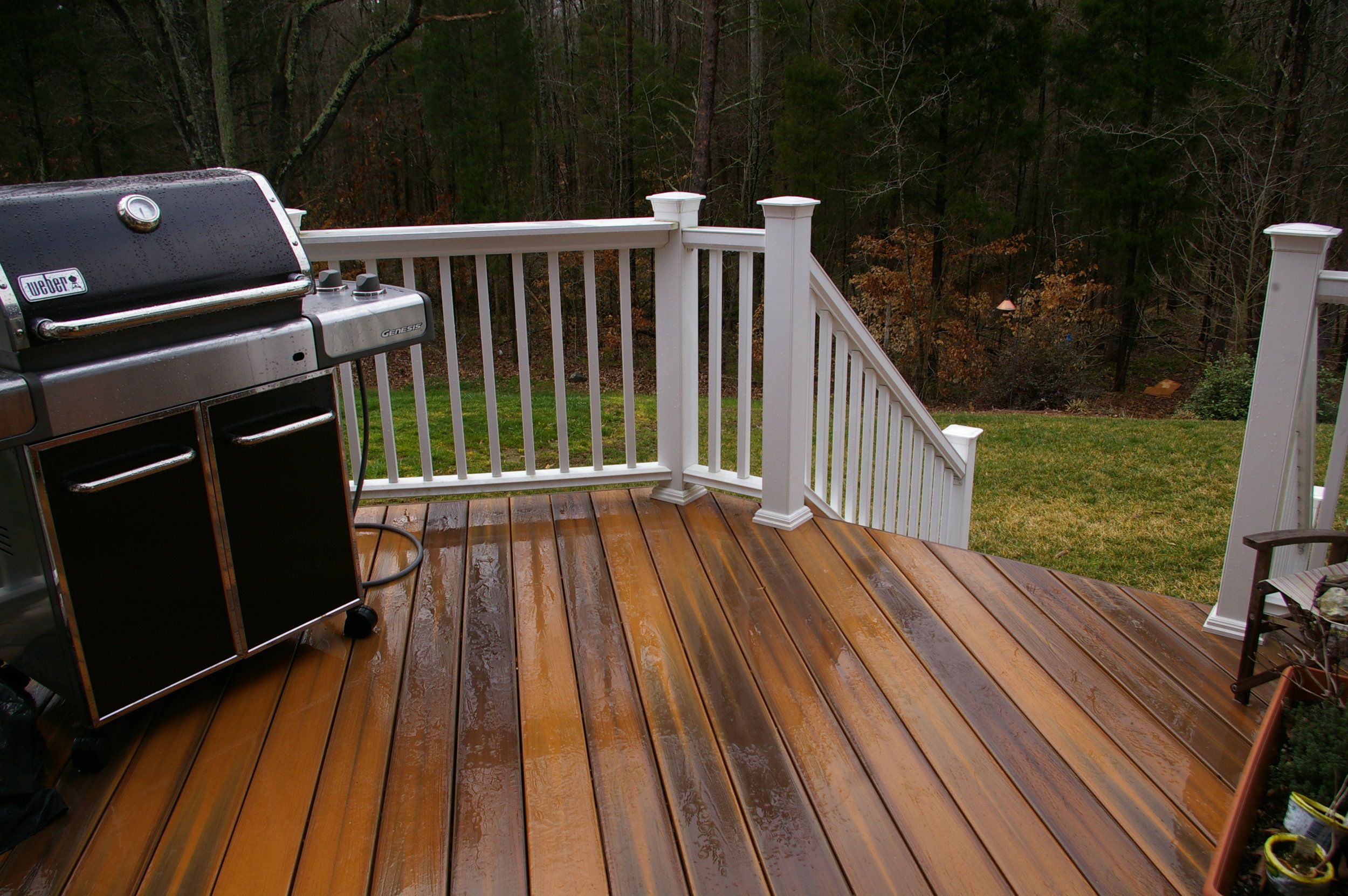
Boards are laid at a 45-degree angle to the home. This design adds visual interest and helps move water downward, which is useful during Charlotte’s rainy stretches. A diagonal pattern gives the deck a more custom look and can help draw attention to features like planters or railings.

3. Herringbone Pattern

A more advanced and decorative option, the boards are laid out in a zigzag, crisscrossing pattern. The result feels upscale and often stands out as a centerpiece. While it takes more planning and cuts, the final look is worth it if you want something unique and artistic.

Each of these patterns changes the way light and shadows fall across your deck, especially during late afternoon and early evening. For example, if your deck faces west and catches a strong sunset, a diagonal or herringbone layout can create beautiful visual effects as the light moves. Beyond aesthetics, some patterns help distribute weight more evenly or manage water drainage, giving you both style and function.

Choosing the pattern isn’t just about what looks best—it’s about what fits best with your space and needs. Knowing how each pattern behaves helps make a final choice that feels good now and continues to hold up over the years.

Choosing the Right Pattern for Your Home

Finding the right deck pattern is more than matching lines and angles. Think about how you use your space and how the pattern will flow with it. A diagonal layout might feel exciting and playful for a social space, while a horizontal design can feel calming and solid, perfect for relaxed evenings. If your yard has a slight slope or your home sits at an angle, the direction you lay the boards can help tie everything together visually.

Home style matters, too. A clean, traditional home might work better with simple straight patterns that highlight symmetry. On the other hand, modern or craftsman-style homes might benefit from bolder choices like herringbone or even mixed layouts that add depth. Think about the view from inside the house and how the pattern will look through the windows.

Your yard layout and deck shape also affect how patterns perform. Long decks can sometimes look stretched out if the pattern runs along the full length. Laying the boards across the short side can help balance the look and make the space feel more square. When in doubt, walk the area and imagine the lines drawn across it—that can help you picture what will make the space feel more balanced.

Here are a few things to ask yourself when picking a pattern:

- Do I want the space to feel wider, longer, or more cozy?

- Will the pattern line up cleanly with doors, windows, or furniture?

- Do I want a quiet look or something that draws attention?

- Is water drainage a concern based on where my deck sits?

- How much maintenance am I okay with—especially for complex patterns?

Sometimes the simple choice ends up being the best fit. Other times, working with a mix of shapes can add that little extra touch that makes your deck stand out. Either way, choosing with intention keeps the final result feeling right.

Installation Considerations for Composite Deck Patterns

Once you’ve picked your pattern, it’s time to think about how it all comes together. The more complex the design, the more skill it demands during installation. Composite materials don’t behave exactly like wood. They’re made of a blend of recycled materials and tend to expand or contract differently with heat and moisture. That means precision matters more, especially at joints, corners, and seams.

An experienced team knows how to handle these materials and avoid issues like misaligned boards or gaps that look fine now but grow over time. Patterns like herringbone require accurate measuring and repeated cuts to get clean alignments. Any small slip in planning can throw off the whole design. It may look simple from the surface, but the groundwork needs to be strong and level or the final look could suffer.

Spacing is also something that can’t be ignored. Too tight, and boards might buckle on hot days. Too loose, and the gaps feel awkward. Knowing the local climate—like the mix of humidity and heat typical in Charlotte—helps get this part right from the start.

Fastening systems matter as well. Some composite boards hide the screws for a cleaner finish, but they also need more careful planning to keep everything tight without damaging the material. Patterns also affect framing needs. A herringbone layout, for instance, might need extra supports underneath to hold the design in place and keep it from flexing over time.

By the time the boards go down, problems should already have been solved. The best jobs make the pattern feel natural, like it always belonged in that space, without sharp transitions or awkward cuts. Getting there takes planning up front and the kind of hands-on experience that knows what to look for before the first board ever gets laid.

Maintaining Your Composite Deck Pattern

Once your deck is done, keeping it in good shape comes down to small efforts over time. Composite boards don’t splinter or fade like wood, but pattern designs can still lose their sharp look if grime builds up or water pools in the wrong spots. Even though maintenance for composite tends to be low, giving it the right attention now and then keeps it looking close to brand new.

Sweep your deck regularly. Pine needles, leaves, and dust can settle into the pattern, especially in corners and between boards. On Charlotte’s warmer days, it’s smart to rinse things off with a hose, pushing debris out before it becomes stuck. If there’s more buildup, a mild soap with a soft brush works well without damaging the finish.

Watch out for mold or mildew in shaded areas. These spots stay damp longer, and even composite boards can collect buildup if not cleaned often. The same goes for spots under grills or planters—spills and leaks can leave behind hard-to-clean stains if left too long.

Seasonal checks help, too. Before fall hits, clear the surface of any tree droppings so they don’t sit through the wetter months. In the spring, look at how the sun hits the deck. UV rays won’t crack composite boards, but they can dry out anything left on the surface. Tightening screws, checking gaps, and clearing out drainage paths helps avoid small problems turning into larger repairs.

Consistent upkeep feels easier when it becomes routine. One homeowner in Charlotte tucked a broom under one of the benches and made it part of their weekly habit to sweep off the surface before they used the grill. That simple step kept leaves off their diagonal deck layout and helped avoid slippery buildup.

Patterns play a big role in how well a deck hides or highlights dirt, too. Herringbone or diagonal layouts can help disguise wear if cleaned often, but straight patterns may show each smudge more clearly. The key is doing a little here and there, so your deck always feels like the relaxing spot it was meant to be.

Crafting Your Custom Deck Vision

Thinking through composite deck board patterns adds more than just style to your backyard. It helps guide how the deck feels, looks, and works with the rest of your space. A clean horizontal layout might make a small yard feel bigger. Diagonal boards could lead the eye toward a garden or view you love. A well-done herringbone design becomes a talking point without needing extra décor.

The shape of your home, the direction of the sun, and how you move through your yard all come into play. Getting those details right ties the deck into the space instead of making it look like an afterthought. Matching function with the right pattern gives you something comforting and personal every time you step outside.

Whatever pattern you lean toward, starting with a clear picture of what fits your space and how you plan to use it makes the rest of the process smoother. With composite materials, your deck holds up better over time, and when it's laid out with care, it keeps looking sharp through every season.

Ready to transform your outdoor space with the perfect deck design? Discover how composite deck builders in Charlotte can help bring your vision to life. Explore your options and learn more about the benefits of composite materials to ensure your deck looks stunning and lasts for years to come with Deckscapes, Inc.